
Beethoven: string quartet op.135, i: an analysis of the exposition
Last updated on April 3rd, 2026 at 12:22 am
Table of contents
Introduction
The string quartet in F major, op.135 obviously belongs to the late period in Beethoven’s oeuvre as it was written in 1826. It is also the last of the so called late string quartets which consist of the following quartets:
- Quartet in E-flat major, op.127 (1825)
- Quartet in B-flat major, op.130 (1825)
- Quartet in a minor, op.132 (1825)
- Quartet in c-sharp minor, op.131 (1826)
- Quartet in F major, op.135 (1826)
There has been written a lot about these late string quartets and their various style characteristics. One thing is certain: the proportions of this quartet in F major are quite different from the previous three, that is to say smaller in number of movements and in duration. Some claim a return to the classical style of Haydn and Mozart. I’ll leave that to your own judgement
I will try to analyse the exposition of the first movement and give you some insight in form and harmonic constructions Beethoven used. Contrary to my usual practice, I will give a narrative impression of the opening of the first part. Because I feel it calls for it and it has helped me in my interpretation of it.
Once again I am grateful that I had the opportunity to discuss my findings with Menno Dekker, my former professor at the conservatory of Amsterdam.
Historical context
Beethoven wrote the string quartet in F major in August and September of the year 1826 in the weeks following the suicide attempt of his nephew Karl on August 7, 1826. He was guardian to this nephew, a relationship that was fraught with difficulties.
On the 29th of September Beethoven went to stay with his brother Johann at Gneixendorf where he finished the quartet. Beethoven tried to recover there from the shock of the suicide attempt of his nephew. During the stay Beethoven was very introverted and communicated sparingly with those around him.
On the 27th of November Beethoven decided to return to Vienna immediately and because of the deteriorated relationship with his brother and especially his brother’s wife, he was denied a closed carriage. He had to endure two days of wind and weather in an open carriage. Upon arrival in Vienna, he was literally deathly ill. He died on March 26, 1827.
The string quartet in F major, op.135 is the last complete work Beethoven wrote.
Practical information
In this text a lot of references are made to the score of the first movement. This is done by means of the measure number. Ideally you have a score with measure numbers at your disposal. A score can easily be downloaded from IMSLP.
In general notes on analysis you can find some remarks on abbreviations, notation and concepts. Some books that I have been consulting can be found in consulted literature. At least all references made to literature in the notes should relate to entries in the consulted literature. The music examples are made in Musescore 4.
Look here for my use of Sonata Form terminology.
Notational convention for major and minor keys
As for a notational convention of major and minor keys: I will use capitals for major keys and lower-case letters for minor keys. For major keys I will often add the word major and for minor keys the word minor, but in music examples and diagrams the words major and minor will in general be omitted. So B major or B for B major and b minor or just b for b minor.
Most suitable devices
Finally it must be mentioned that although automatic adjustments are made to view these posts on tablets as well as mobile phones, they can best be accessed on a computer/laptop. The reason being that there are various tables and lists (like abbreviations) of which the columns will appear one beneath the other (especially on a mobile phone). If that is the case the coherence will be lost.
Beethoven: the string quartet in F major, op.135
First movement: Allegretto
Global structure
The first movement is in sonata form and contains the following elements:
Measure
1-62fb
62sb-100
101-193
Section
Exposition
Development
Recapitulation
Key (relative to F major)
ivMD – V
V/V – ivMD
ivMD – I
Table 1: layout of the first movement [fb=first beat; sb=second beat]
The exposition
A downloadable PDF of the score of the exposition with my annotations can be found here. Figure 1 shows the first phrase of the exposition.
The first phrase

fig.1 Beethoven: string quartet op.135, i, mm.1-10
When looking for some structure in this remarkable first movement we might start as follows: apparently the viola wants to tell us something in veiled termes (a b-flat minor or ivMD chord in an F major context)[1]ivMD is the minor mode version of the triad on the fourth scale degree (of F major). It is a form of modal mixture. Look here for some explanation. and the cello supports her (mm.1-2). A secret? The first violin is surprised: what? (V7 in m.2).
The viola repeats her remark (mm.3-4). The second violin starts supporting the message (just to get the picture) and then joins in with the emphasized exclamation: what? (V7 with the sf in m.4).
The viola starts explaining and the others join in: understood! (fourth eighth note of m.4 until the third eighth note of m.10). The texture of the phrase seems strongly to imply a conversation between four voices. Of course this is my interpretation and surely you will have your own.
More technically speaking, the first utterance of the viola with the reply of the first violin (mm.1-2) might be called a basic idea and mm.3-4 the repetition thereof. Together they form the presentation of a sentence structure. The following six measures (m.4sb – m.10fb) can than be seen as the continuation of the sentence, which ends with a perfect authentic cadence (I:PAC) in F major, the home key of the movement and the quartet as a whole. The default ratios in a sentence are 1:1:2, so in that case the continuation has the same length as the presentation. Here we find a continuation that is six measures long where we expect four measures and on top of that the continuation introduces new rhetoric material and is therefore contrasting.
When looking more closely at the continuation we discover three two bar units that begin on the fourth eighth note of m.4 and end on the third eighth note of m.10. Notice first of all that the continuation is shifted one eighth note with respect to the bar lines. Secondly that the phrase does not end on the first eighth note of m.10; this follows from the rhythmic structure of the continuation. In fact there is an elision between the first and second phrase on the third eighth note of m.10 despite the fact that the first phrase does not contain any notes on the second beat (third eighth note of) m.10.
The first two bar unit ends on the third beat of m.6. This can easily be continued with the fourth eighth note of m.8: it has the same rhythmic structure and provides a rounding cadential progression. It is a complete phrase in itself. However Beethoven inserts two additional measures (m.6 last eighth note – m.8 third eighth note) which can be seen as an (internal) extension.
Notice that the last three sixteenth notes of m.6 until the first eighth note of m.8 are very similar to the last three sixteenth notes of m.8 until the first eighth note of m.10. The thematic structure is the same with a thirty-second note (motive c2) instead of a sixteenth (motive c3) and some doubling in the voices. In fact they are variants of the basic motive c, shown below in fig.2.
The harmonic structure is also the same, except for the end of course. The first of these phrases (mm.6sb-8fb) ends with an evaded cadence (EC) on the first beat of m.8; this comes as a surprise, one expects an F natural in the viola but it is an A natural. This creates a tension and an expectation to resolve it. The second phrase (mm.8sb-10fb) does this with the proper closure (PAC) in mm.9-10.
The motives of the first phrase
Figure 2 shows the motives of the first phrase. There are three basic motifs with their variants: a, b and c. They are put together in various combinations to form composite motifs like u and v.
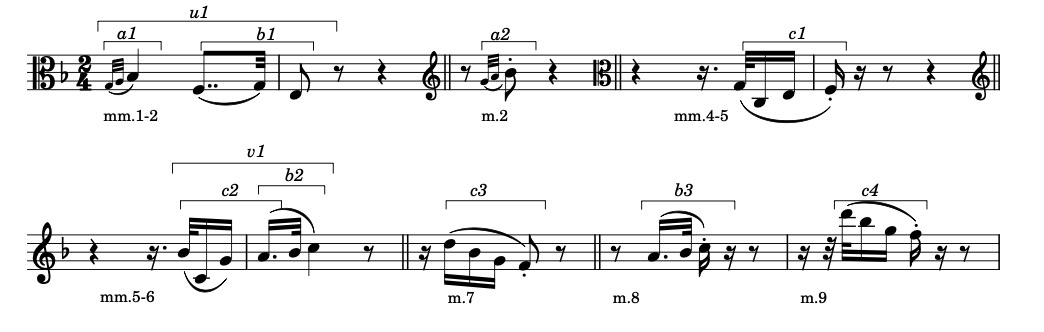
fig.2 Beethoven: string quartet op.135, i, the motives of the first phrase
The question arises whether this first phrase is the primary theme (P) of this movement. To answer that question we need to look at the next phrase which is shown in fig.3.
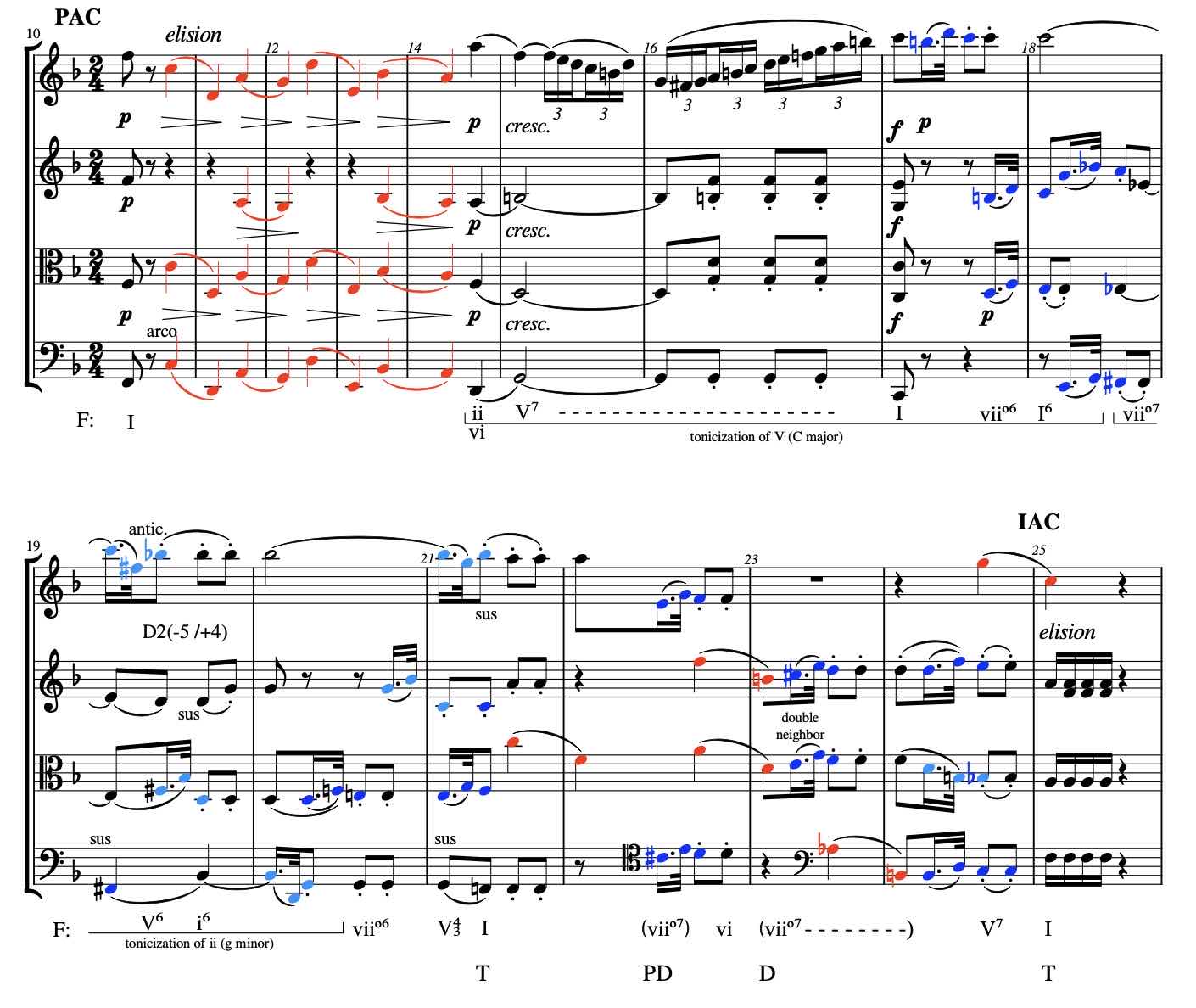
fig.3 Beethoven: string quartet op.135, i, mm.10-25
The second phrase
The second phrase begins with a theme in unison with relative long notes (mm.10sb-14fb) that reminds one of a cantus firmus. [2]Joseph Kerman mentions this characterization in his book on the Beethoven strings quartets: Joseph Kerman, The Beethoven Quartets (New York [ect.]: Oxford University Press, 1967), 355.
I will go into this in more detail shortly but let’s first try to get an idea of the whole phrase. In m.15 a strong inclination towards the dominant (C major) starts. Measures 15-16 are in fact the dominant seventh chord of C major and that chord is reached in m.17. Is this the modulation to the dominant of F major and therefore (the beginning of) the transition (TR)?
Looking ahead at m.21 we find an arrival on an F major chord following a contrapuntal cadential progression. This already makes the listener doubt whether there has been a modulation to C major. But after hearing the confirmation with a full cadential progression and the imperfect authentic cadence (I:IAC) in mm.22-25 it is clear that we are still firmly rooted in F major. So in retrospect all this material belongs to the primary theme (P) and I would like to name mm.10-25 in accordance with Hepokoski & Darcy P2. [3]Hepokoski, James A, and Warren Darcy, Elements of Sonata Theory: Norms, Types, and Deformations in the Late-Eighteenth-Century Sonata (New York [etc.]: Oxford University Press, 2006), 71. Measures 1-10 are then logically referred to as P1.
The “Cantus Firmus” theme
Let us now delve a little deeper into the rhetorical aspects of these 16 bars and start with the cantus firmus like theme in mm.10sb-14fb. I was wondering why Beethoven chose these succession of notes and with the aid of Menno Dekker I found the following hypothesis. To explain it I will first say something about the character of the various scale degrees of a scale, not entirely coincidentally, the scale of F major. Figure 4a shows the scale of F major with the numbers of the scale degrees added.

fig.4 the different character of the scale degrees in a scale
All scale degrees have different functions (and names) in the scale. A fundamental distinction can be made between the three stable scale degrees that form together the tonal triad (fig.4b) and the four other scale degrees that are less stable and tend towards one of the stable tones of the scale. This is perhaps most evident in the seventh scale degree (the leading tone), which strongly tends towards the tonic. Notice that these four notes form the viiø7 diatonic half diminished seventh chord (fig.4c).
One more thing before entering the analysis of the theme. It concerns the relationship between the diminished triad on the seventh scale degree and the dominant seventh chord on the fifth scale degree. As shown in fig.5a if we start with the triad on the leading tone and we add below it the dominant (fifth scale degree) than we get the dominant seventh chord.
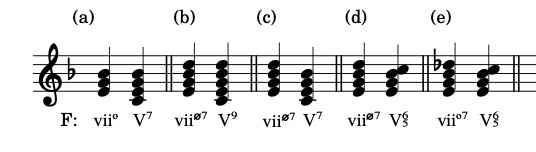
fig.5 the relationship between a vii0(7)/ viiø7 and the dominant seventh chord
So a vii0 can be seen as the dominant seventh chord without its root, but it nevertheless shares important properties with the dominant seventh chord: the leading tone (the seventh scale degree) very much tends towards the tonic and the fourth scale degree tends towards the third scale degree. The vii0 chord therefore has dominant characteristics.
If one starts with the viiø7 in stead of the vii0 chord adding the dominant results in a dominant ninth chord as shown in fig.5b. Figures 5c and d show the resulting chords in various positions if the dominant is not added but replaces the seventh in the viiø7 chord. Figure 5e shows the progression when one starts with the fully diminished chord on the seventh scale degree (a chord that is proper to the harmonic minor scale) and then replaces the seventh with the dominant. This is only a step of a semi tone in the soprano with three common tones in the other voices. The resulting dominant seventh chord is not in root position however as is the case in example 5d.
Let’s now return to the cantus firmus like theme which is shown again in fig.6.

fig.6 Beethoven SQ op.135 mm. 10-14, first violin
The theme can be divided in two phrases of 4 notes each as shown by the colours. The phrases are the same, except that the second phrase (blue) is a second higher than the first (red). Starting with the second phrase one can see that the first three notes come from the set of unstable scale degrees or, to put it another way, they come from the viiø7 chord (talking F major here). Not all the notes of the viiø7 chord are there; the second scale degree (the G natural) is missing. This is shown in fig.6b. Notice the quite dramatic fall of a minor seventh which is then more or less filled up with the fourth and third scale degree. Leonard B. Meyer would call this a Gap-fill melody.[4]Leonard B. Meyer, Explaining Music: Essays and Explorations (Berkeley [etc.]: University of California Press, 1973), 145.
The last note (the A natural) is the third scale degree and clearly belongs to the tonic triad. So when we group the phrase as 3 + 1 note, one can recognise a stylised or arpeggiated viiø7-I progression or when emphasising the dominant properties of the viiø7 a stylised dominant-tonic relation (the dominant without the root).
Going backwards to the first phrase one finds the same structure but this time one second lower and aimed for the third of the e diminished triad: the G natural. Why a D natural on the first beat of m.11 and not a D-sharp? I think the reason is that the whole four bar phrase is cast in the key of F major and strictly sticks to it. This phrase of four notes can be interpreted as the seventh scale degree of F major (the E natural) preceded by its applied VII7AEOL: a (VII7AEOL) – ^7 progression.
The rhythmic structure
I’d like to investigate this theme from one other angle: that of the rhythmic structure. I will start from the definition of rhythm given by Grosvenor Cooper and Leonard Meyer. They define rhythm as:
.. the way in which one or more unaccented beats
are grouped in relation to an accented one.[5]Grosvenor W. Cooper and Leonard B. Meyer, The Rhythmic Structure of Music (University of Chicago Press, 1963), 6.
They use terms that are generally referred to as metrical feet or poetic metre . They focus on five rhythmic groupings:
iamb ∪ −
anapest ∪ ∪ −
trochee − ∪
dactyl − ∪ ∪
amphibrach ∪ − ∪
A “−” stands for a stressed/long syllable, a “∪” for a unstressed/short syllable.
Now when applying this to the theme under consideration we get something like shown in fig.7a.

fig.7 rhythmic analysis of the “cantus firmus” theme
Because the movement is in a two-four time the rhythm at the basic level is trochaic, i.e. − ∪ or stressed – unstressed. This complies with the meter of the two-four time bars in which the first beat is stressed and the second one unstressed. This is indicated by the lower brackets in the first row beneath the stave. Cooper and Meyer call this the dominant organization of the theme.[6]Cooper and Meyer, The Rhythmic Structure of Music, 13.
However when looking at the proximity of notes in the melody (mm.11sb-12fb and mm.13sb-14fb, which are emphasized by the second violin) and taking into account the dynamic signs of Beethoven (fig.3, the decrescendos over the bar line) one can distinguish a latent iambic organization.[7]Cooper and Meyer, The Rhythmic Structure of Music, 13. It is indicated by the inverted brackets in the first row beneath the stave.
Beethoven introduces an ambiguous sense of rhythm in the theme due to the fact that the theme starts on a weak beat with the decrescendo sign which nevertheless ends on a note from the tonic triad (first beat of m.12 and m.14). This would have been completely different when it would have been written as in fig.7b. Here the dynamic signs would be compliant with the basic rhythmic organization, but notice that the resolution is on a weak beat. The whole phrase would have been without the syncopated/ambiguous rhythmic structure that Beethoven gave us which of course gives an interesting tension.
At a higher level (grouping two notes together) there is a iambic organization ending with a note from the tonic triad. This is shown in the second row beneath the stave. Still one level higher (grouping four notes together) there is again a iambic organization which corresponds to a leading tone – tonic progression.
So performers should play to the first beat of m.12 and of m.14 and at the same time show something of the iambic organization in accordance with the dynamic signs of Beethoven and of the proximity of notes in the melody. That means that the first beats of m.11 and m.13 are also emphasized however within the dynamic signs Beethoven gave us. The listener should be able to feel the ambiguity.
The lead-up to C major
We now come to the bars where Beethoven makes a feint towards C major. For your convenience the passage is shown again in fig.8.
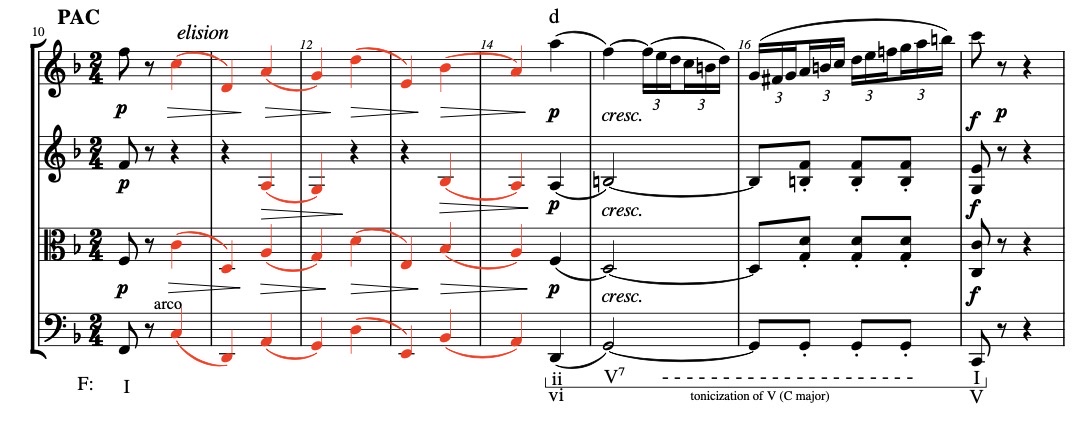
fig.8 Beethoven: string quartet op.135, i, mm.10-17
On the second beat of m.14, the A natural of the first beat is complemented by an F natural and, surprisingly, a D natural (instead of a C natural, which would form the F major chord). Together this forms a d minor chord, or the vi (and first replacement) of F major. This chord can also be interpreted as the ii of C major. Measures 15-16 form a G dominant seventh chord and strongly imply C major which follows indeed on the first beat of m.17. So this is a strong cadential progression towards C major. It is not just another key but the dominant of F major (the home key of this movement) and the key to be expected of the secondary theme (S) of this sonata form movement.
Notice the crescendo in mm.15-16 which makes the forte arrival on the first beat of m.17 even more important. Taken together with the complete new thematic material starting in the second half of m.10 this could easily be taken for a (independent) transition to the second theme (S).
I have already revealed that this is not the case and in the next paragraph I will show how Beethoven returns to F major.
The return to F major
Figure 9 again shows the second half of the second phrase.
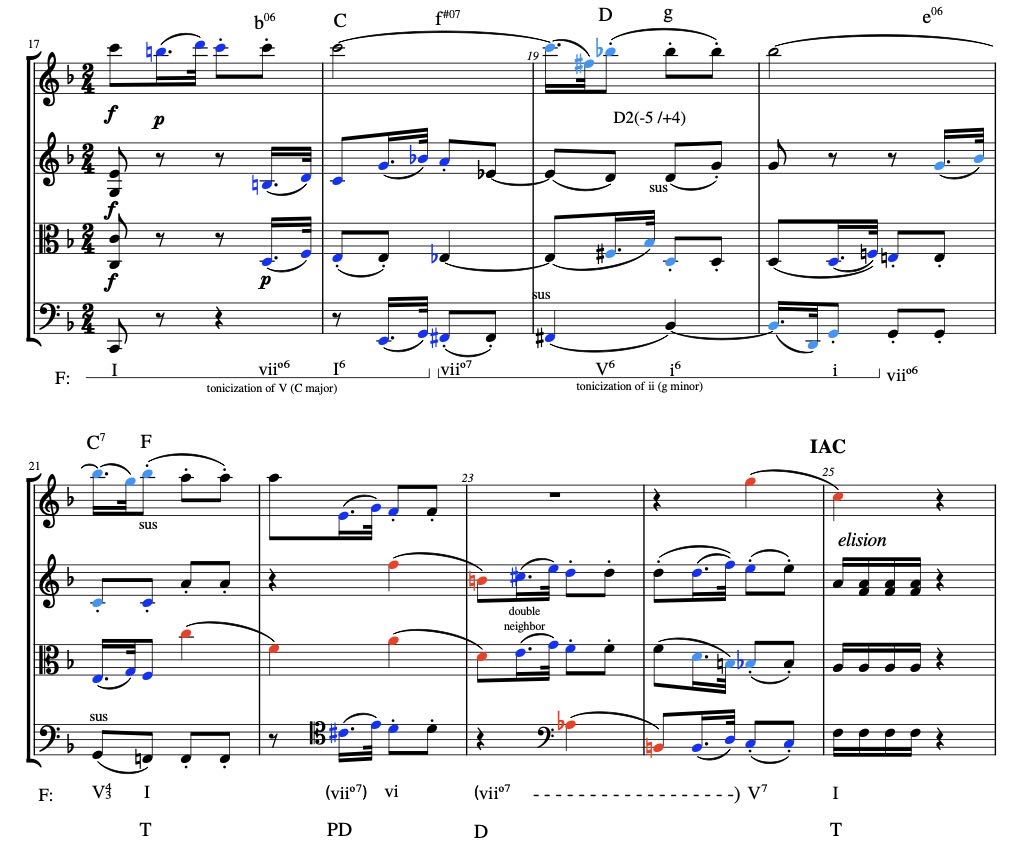
fig.9 Beethoven: string quartet op.135, i, mm.17-25
The rhetorical aspect
Perhaps first consider the rhetorical aspect. Immediately after the first eighth note in m.17 there is a return to a variant of motive b of the first phrase P1 (fig.2) in the first violin. Here it is in fact a double neighbour note for the C natural to come on the second beat of m.17. Beethoven uses this quite often in a contrapuntal (imitative) way in the remainder of the phrase. It is shown in blue and can be found as motive b4 in fig.10 below. Other variants of this basic motive b are also found, for instance on the first beat of m.19 in the first violin and in the viola on the second eighth note of m.19. These are shown in turquoise and only the first one (m.19) can be found as motive b5 in fig.10.
In m.21 we find the F major chord followed by the full cadential progression in F major. From a rhetorically point of view it is interesting to see that Beethoven from this point onwards adds elements of the cantus firmus like theme. They are shown in red and start in the viola on the second beat of m.21. So in fact Beethoven uses a learned (contrapuntal or Baroque) style in this second phrase of the movement. That is one reason why commentators refer to this work as related to the early classical style of Haydn and Mozart.[8]See for instance: Kerman, The Beethoven Quartets, 354.
The harmonic aspect
From this perspective the most interesting part is the mm.17-21 progression because here Beethoven leads us from the feint to C major back to F major. As you can see I included some of the chord names to make the analysis more comprehensible.
If we start on the second half of m.18 we find a tonicization of g minor: its vii07 on the second beat of m.18 (the f# diminished seventh chord) and by replacing the E-flat in the second violin with a D natural the harmony becomes an applied D dominant seventh chord in first inversion of g minor (second eighth note of m.19). This is the progression as shown in example 5e (fig.5). This is not the whole truth because Beethoven made an anticipation on the second eighth note of m.19 in the first violin so the seventh in the D dominant seventh chord already disappeared, but the brain will remember the C natural and hear a D dominant seventh chord all the same.
After this (in the second half of m.20) starts the same progression but now towards F major. The G natural and B-flat change function here: they become the third respectively the fifth in the e diminished chord. A harmonic progression with two common tones. The e diminished chord is the vii06 of F major and by adding a C natural (m.21 first beat) this becomes the dominant seventh chord of F major. This is the progression as shown in example 5a (fig.5), be it that the C natural occurs in the alto voice and the bass plays a G natural so the resulting chord is a V43 (m.21).
Taking the measures 18sb to 21sb together one can recognise a descending second or falling fifth sequence D2(-5/+4) as follows:
D – g – C – F or in roman numerals: (V/ii) – ii – V – I,
the descending second being from g to F or from ii to I with there respective dominants in between (in F major of course).
There remains one intriguing question: what is the logic of the gap between C major on the first beat of m.17 and the g minor tonicization starting on the second beat of m.18. With Menno Dekker’s help, I arrived at the following reasoning: if one would follow the descending sequence backwards one would expect a third scale degree so the sequence would become:
E – a – D – g – C – F or in roman numerals: (V/iii) – iii – (V/ii) – ii – V – I
But in mm.17sb-18fb we do not find a minor but C major with its applied vii0 (the b diminished chord). What is the relation between a minor and C major? Indeed C major is the relative major of a minor. So Beethoven used C major – where we had just arrived for entirely different reasons – as a stand-in or replacement of a minor. This is a short cut to make the sequence not too long. Ingenious! This also means that the (vii0) – V progression in mm.17sb-18fb has a completely different function than the progression (ii – V) – V in mm.14sb-17fb, both related to C major.
In m.21 we find ourselves again on/in F major but this is not decisive. F major could function as the predominant of C major, the key we expect to appear somewhere as the key of the secondary theme. The mm.21sb-25fb however help us out: a full cadential progression in F major, again with d minor as predominant but now as the vi of F major, and back we are.
Is this the end of the primary theme P? Yes, as will be shown in the next paragraph but not before I have shown an overview of all the motifs in P (fig.10).
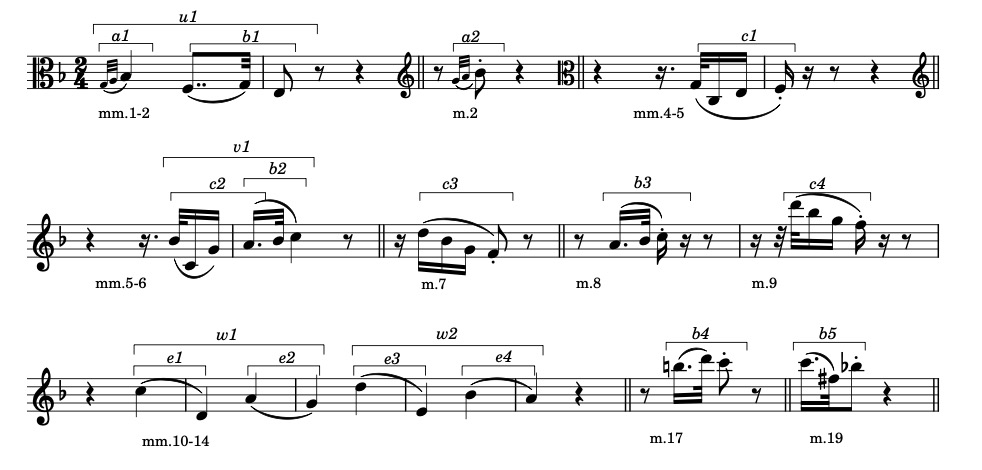
fig.10 Beethoven: string quartet op.135, i, the motives of the primary theme (P)
The Transition
Figure 11 shows the next phrase in the exposition which turns out to be the Transition. As the first beat of m.25 is the end of the P2 of the primary theme and at the same time the beginning of the Transition it is an elision between the two.
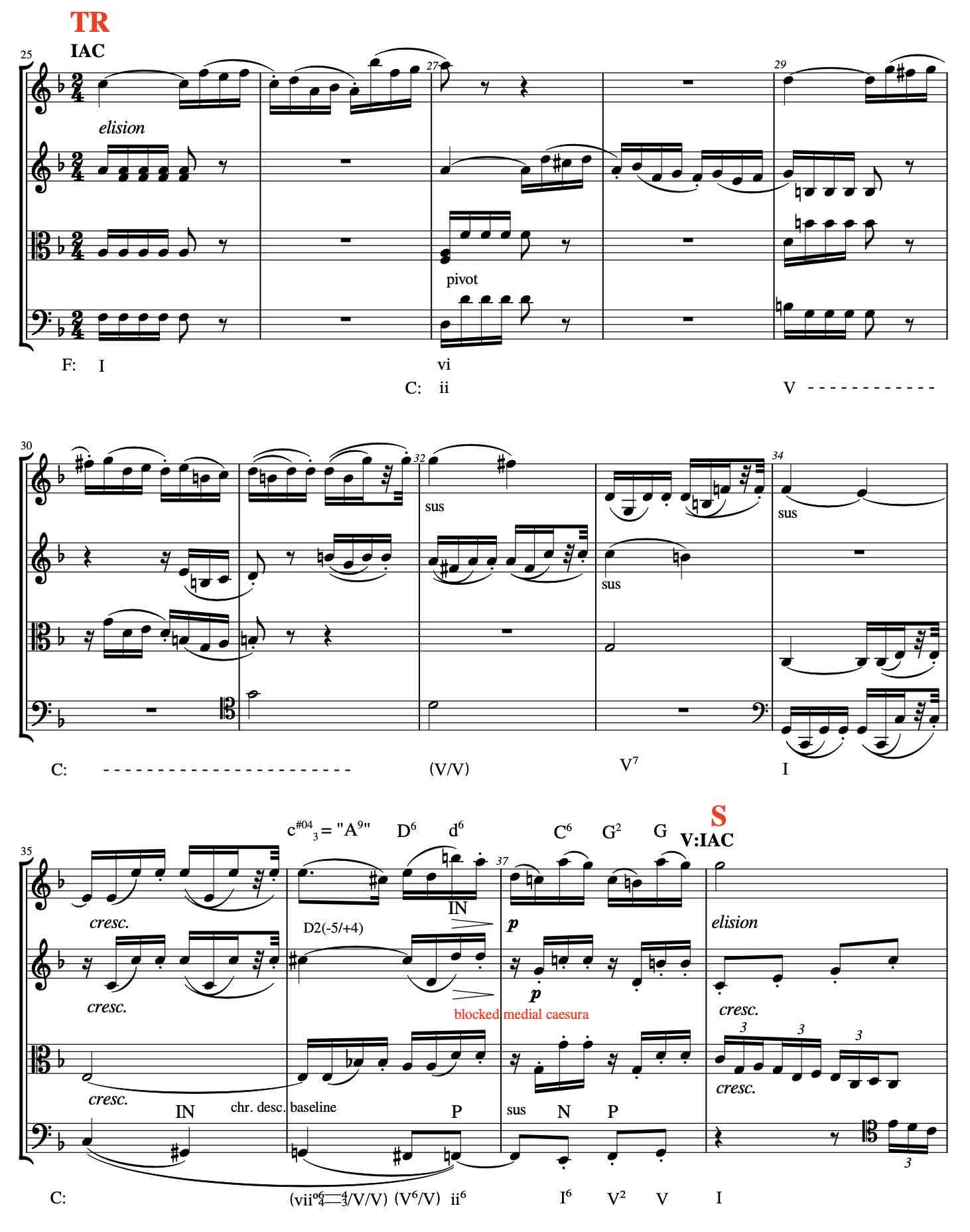
fig.11 Beethoven: string quartet op.135, i, mm.25-38
Transition: the rhetorical aspect
The texture changes completely here. In the first six bars (mm.25-30) we find a melody divided between the first and second violin with accompaniment in the lower strings. This is not the learned baroque style we have seen so far but the homophonic style. So the transition is independent, at least in texture. When we consider the motives however I think there is a strong connection with the motives from P1. Figure 12 shows the motives up to and including the transition.
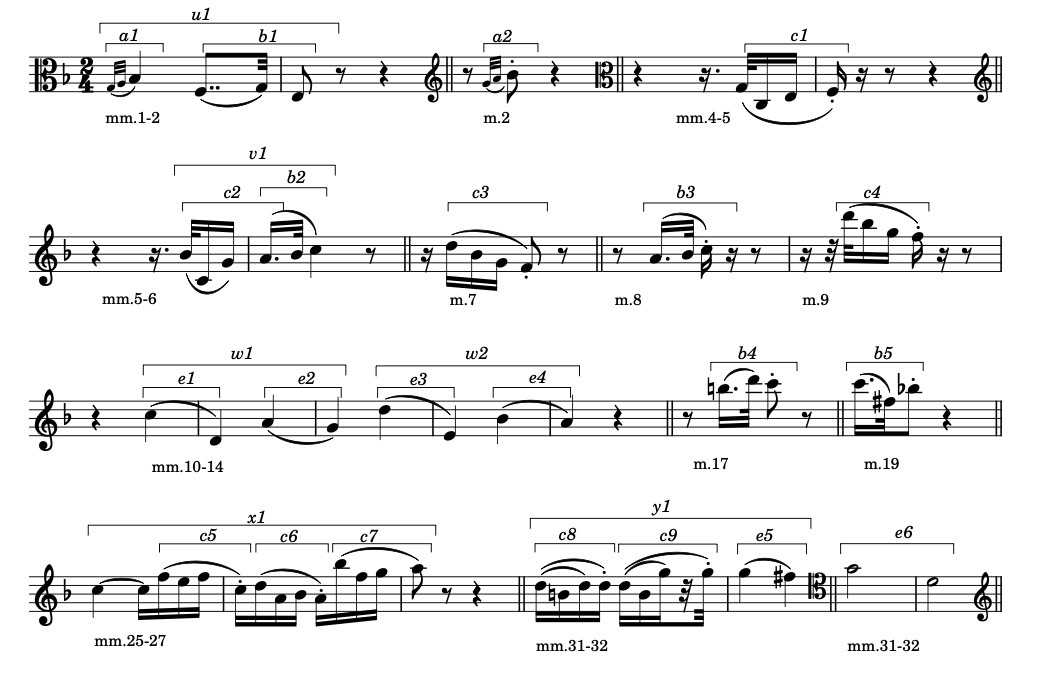
fig.12 Beethoven: string quartet op.135, i, motives up to the second theme (S)
The Transition starts in m.25. The motive played by the first violin shows a strong (rhythmic) similarity to the motive c3 found in m.7 of P1 (fig.1). That’s why it is called c5 in fig.12. The resemblance concerns the rhythm more than the melodic structure. Nevertheless one senses that the origin is the same; it belongs to the same family of motives.
As of m.31 things change again. Notice first of all the augmented cantus firmus like theme (motive e6 in fig.12) in the cello which is continued in the viola in m.33, with a truncation in m34. At the same time the first violin starts another variant of the c-family motives, this time on the beat (again m.31, motive c8 in fig.12). The fact that it starts on the beat changes the motive from being iambic to trochaic as shown in fig.13.
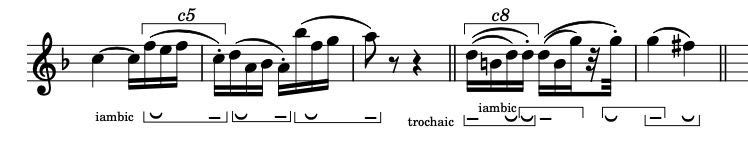
fig.13 Beethoven: string quartet op.135, i, rhythmic analysis of P1 related motives in the transition
The motive c8 is clearly trochaic but in connection with the second half of the bar has a latent iambic inclination: the fourth sixteenth of the bar and the last thirty second are clearly felt as an upbeat. So variants of the same motive (c5 and c8) feel completely different due to their placement in relation to the pulse (and meter).
In the second half of m.31 the c8 motive is changed again and contains the 32nd upbeat which we know from earlier versions of the c-motive (c1, c2 and c4). This leads to a variant of the cantus firmus theme in the first violin (m.32, motive e5) in its original rhythm. This is repeated in the second violin in mm.32-33. So in fact we are looking at a contrapuntal texture with three subjects.
Transition: the harmonic perspective
Just to take a short cut: in m.27 there is again a pivot on a d minor chord, the vi of F major and the ii of C major. This was encountered before in m.14 (fig.3). There it turned out to be a feint but here the modulation to C major materializes. Again there is G major context (the dominant of C major) with it’s own dominant in m.32. This leads to C major in m.34 and then in the second half of m.35 the special transition to the secondary theme (S) starts.
Before we dive into that I will finish the harmonic analysis. First of all notice the chromatic descending bass line starting on the G-sharp in the second half of m.35. It runs until the E natural in m.37. Starting in m.36 the harmonies are as follows: a c#-diminished chord (first a 64 then a 43) in the first half of m.36. With fig.5 in mind one can see this also as an A dominant ninth chord without the root which is the dominant of the chord on the third eighth note of m.36: a D major chord in first inversion. Connecting this to the second half of m.37 we find a global sort of descending second or falling fifth sequence D2(-5/+4): “A” – D – G – C, with an interruption of two chords. These chords can be found between the D major chord m.36 and the G major chords in m.37. First Beethoven makes a chromatic alteration by going from the F-sharp to the F natural (the chromatic descending bass line). This changes the D major chord to a d minor one, a change from a V/V to a predominant ii of C major. Then on the E natural in the cello there is a I6 after which the bass climbs to the dominant on the last eighth note of m.37 by way of the third inversion of the dominant seventh chord.
What is left is to explain the G-sharp in the cello on the second beat of m.35. Well, I would say this is an incomplete neighbour note which kicks off the descending bass line.
Transition: the blocked medial caesura
And now for the transition to the secondary theme (S). A “normal” procedure would be an arrival on either a half cadence in C major (V:HC) or (less common) a half cadence in F major (I:HC), followed by a break or caesura in all voices, the so called medial caesura (MC). [9]Hepokoski & Darcy mention these cadences as the first and second level default for ending a transition: Hepokoski & Darcy Elements of Sonata Theory, 25-26.
Here however there is no half cadence and no break but there is unmistakably the start of the secondary theme (S) in m.38. Because of the missing half cadence we can rule out a caesura fill (CF) and a medial caesura declined.[10]In case of a medial caesura declined the presumed MC does not lead to a secondary theme. Hepokoski & Darcy Elements of Sonata Theory, 45-47. So I think this procedure is what Hepokoski and Darcy call a blocked medial caesura. They explain the blocked medial caesura as follows:
Shortly before the expected articulation of the MC chord, however, the forte music seems to run into a dynamic blockage (like the hitting of a wall) perhaps on a predominant chord or perhaps with the arrival of a cadential 64. […] At this point the dynamics will be suddenly reduced to piano (suggesting perhaps a caesura-fill texture), and a bridge-like arc of music is cast forth to connect the blocked MC (the predominant or 64 chord) to the S-theme proper. […] The blocked-MC-effect usually results in an extended CF-like passage that ends with a gentle V:PAC elided or flush-juxtaposed with the onset of S.[11]Hepokoski & Darcy Elements of Sonata Theory, 47.
When applying this to the passage at hand I think we can find the dynamic blockage on the ii6 chord on the fourth eighth note of m.36. There a sudden reduction of the dynamics to piano takes place. The chord is a predominant ii of C major. What follows is the bridge-like arc of music in m.37 that ends with the V:IAC in m.38 and elides with the beginning of S.
The layout of the exposition
By now we are ready for the layout of the exposition. I didn’t want to give it away before because the exploring of a movement like this is a pleasure in itself. According to my analysis the exposition contains the following elements:
Measure
1-25fb
25-38fb
36-38
38-60fb
59-60fb
60sb-62fb
Element
Primary theme (P1+P2)
Transition (TR)
Blocked medial caesura
Secondary theme (S)
EEC (Essential Expositional Closure)
Connecting gesture / bridge
Key (relative to F major)
ivMD – I
I-V
V-IAC
V
V:PAC
V – V/V
Table 2: layout of the Exposition [fb=first beat; sb=second beat]
The next paragraph will deal with the secondary theme (S), another challenge to analyse.
The Secondary theme (S)
An annotated score of the secondary theme (S) can be found here. Figure 14 shows the first phrase of the secondary theme (S). I will explain why I think this is the first phrase.
The first phrase: a sentence
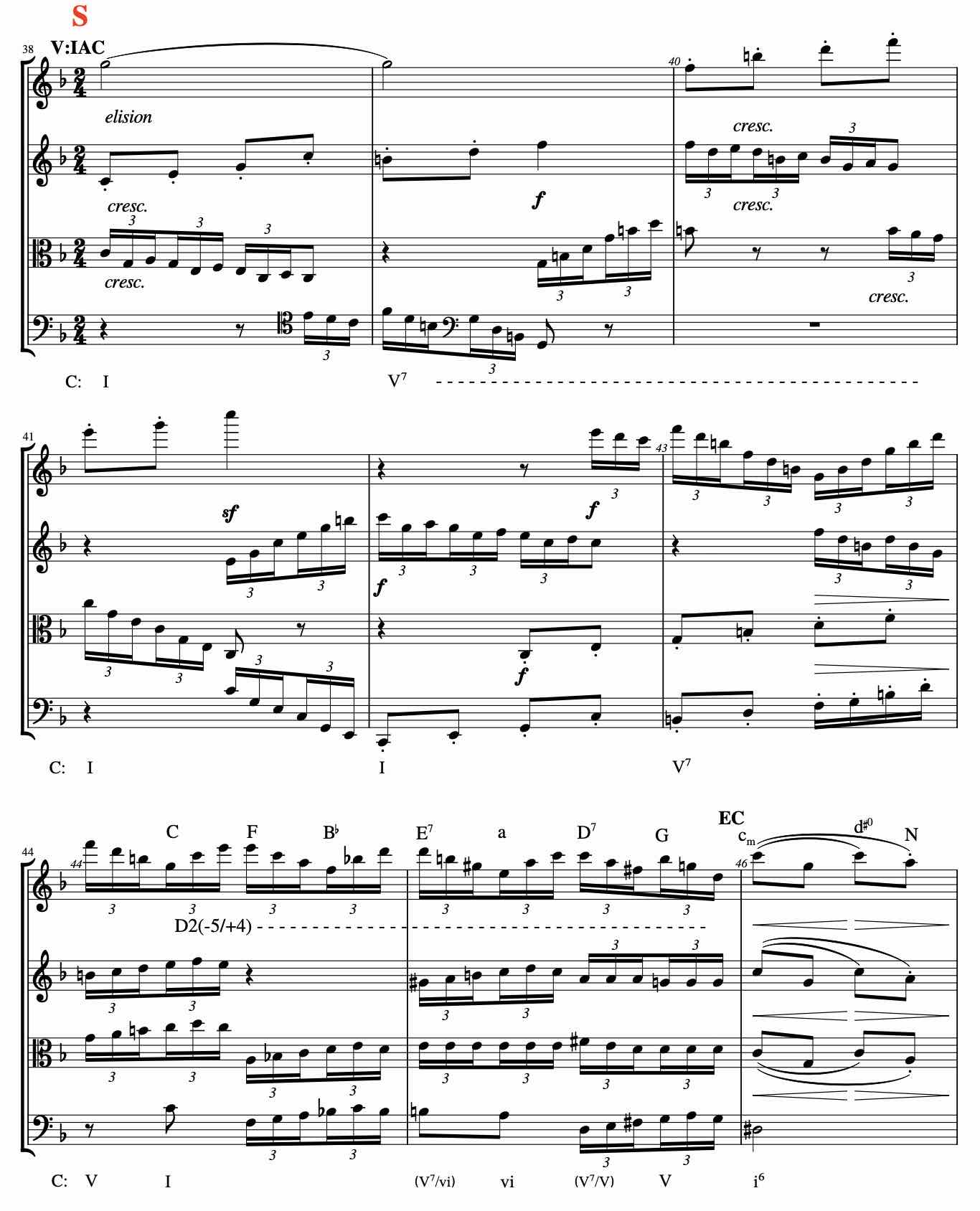
fig.14 Beethoven: string quartet op.135, i, mm.38-46
The second theme starts in the second violin with an elaborate counter movement in triplets in the other voices. It is two measures long and then passes on to the first violin, again a two measure gesture. This looks like a basic idea and its repetition supported by a I-V-V-I harmony. In m.42 the cello starts the same basic idea two octaves lower but then the texture becomes more dense. On the second beat of m.42 the viola joins in in a contrapuntal imitative way culminating in a highly concentrated movement in triplets that ends with an extraordinary harmony on the first beat of m.46.
My suggestion is to model this as a 2+2+4 sentence structure. Thus mm.38-39 form the basic idea, mm.40-41 the repetition thereof and mm.42-45 the continuation. As already mentioned the continuation starts with the basic idea in the cello and the imitative entrance of the viola. As of the second eighth note of m.44 a descending second or falling fifth sequence D2(-5/+4) starts. As this sequence ends with a vi-V or predominant- dominant progression (with their respective dominants) in m.45, one expects a resolution to the tonic C major. But instead we find an inexplicable chord on the D-sharp bass note (m.46).
My explanation would be that on the first beat of m.46 the D-sharp should be interpreted as its enharmonic equivalent E-flat. Then the chord on the first beat of m.46 is a c minor chord in first inversion and as such an evaded cadence (EC). Evaded because it is a chord in first inversion and of course in this interpretation it is the minor mode of the tonic.
To explain what happens next we need to look at the phrase to follow as shown in fig.15. Notice that I did split the bass note in m.46 in an E-flat and a D-sharp.
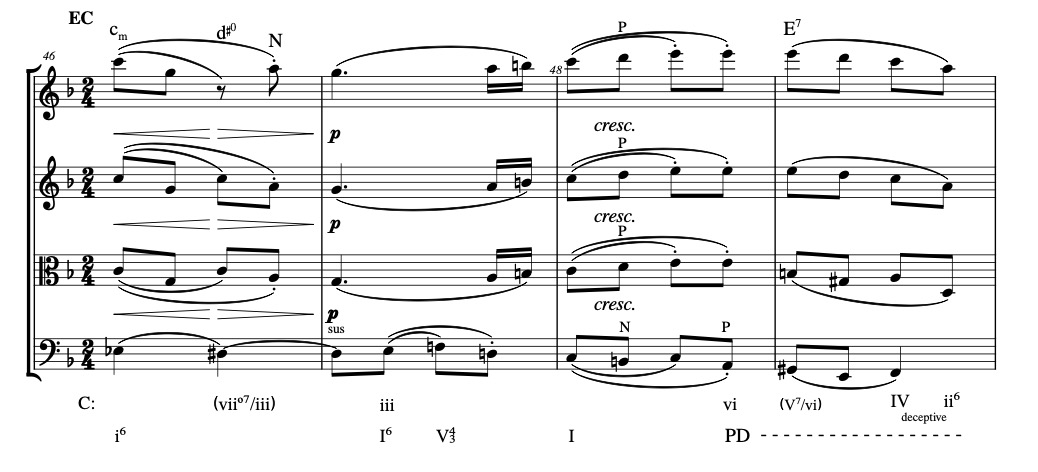
fig.15 Beethoven: string quartet op.135, i, mm.46-49
The art of procrastination
On the second half of m.46 the D-sharp is truly a D-sharp and the chord is a vii07 of the iii of C major (being e minor). This e minor chord (on the second eighth note of m.47) I would interpret as a tonic triad without its root so it resembles and replaces a I6. It is followed by a somewhat arpeggiated dominant seventh chord in second inversion (V43) which leads to the tonic chord on the first beat of m.48. This however is no restpoint or point of arrival whatsoever.
The music continuous to flow and by way of a few passing and neighbour chords, the last of which is a predominant vi, m.49 is reached where we find again quite a surprise: an E dominant seventh chord. In this context one thinks of an applied dominant for vi (V7/vi), the vi being a minor. Does that follow? No! What follows is IV and then a ii6 (by adding the D natural in the viola). The IV or F major chord can however be seen as the VI of a minor and so the E dominant seventh chord resolves deceptively to F major to be continued as d minor. The V/vi or V7/vi does ring a bell and in a minute I will explain that the V/vi is quite a common replacement for a dominant V.
Due to the deceptive resolution, the progression in m.49 is at the same time very predominant like and makes us once again expect a dominant chord but again Beethoven raises the tention by refusing to meet expectations. Moving on to the next phrase (fig.16) makes clear what detour Beethoven now has in store for us. I included m.49 and m.54 to show the connection with the surrounding phrases.
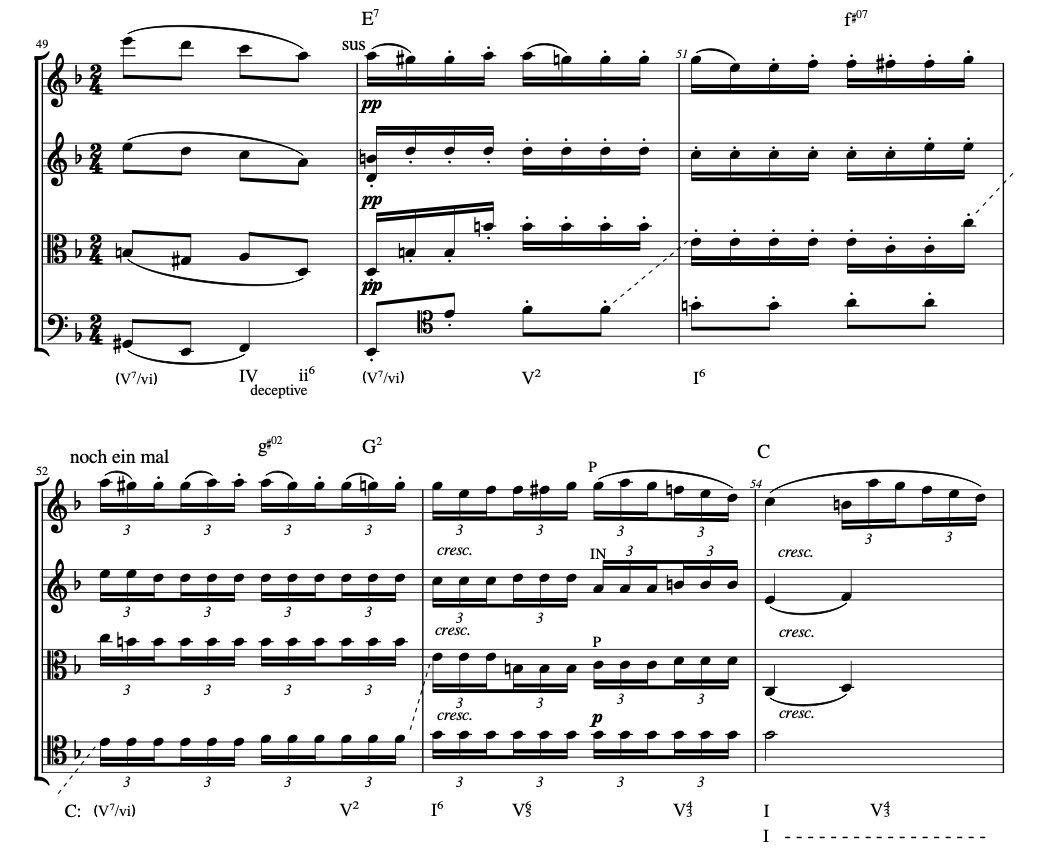
fig.16 Beethoven: string quartet op.135, i, mm.49-54
As can be seen in fig. 16 the V7/vi chord returns twice in what follows: in m.50 and in m.52. Notice that mm.52-53 are a (rhythmical) dense version of mm.50-51 be it that m.53 ends differently to facilitate a cadential progression towards the tonic chord on the first beat of m.54. As the bass notes alternate between the viola and the cello I made a version of mm.50-54 in which the bass notes are always notated in the cello, so in m.51 and m.53 the voices of the viola and cello have been swoped. Moreover the cello part is throughout in the bass clef. It looks like fig.17.
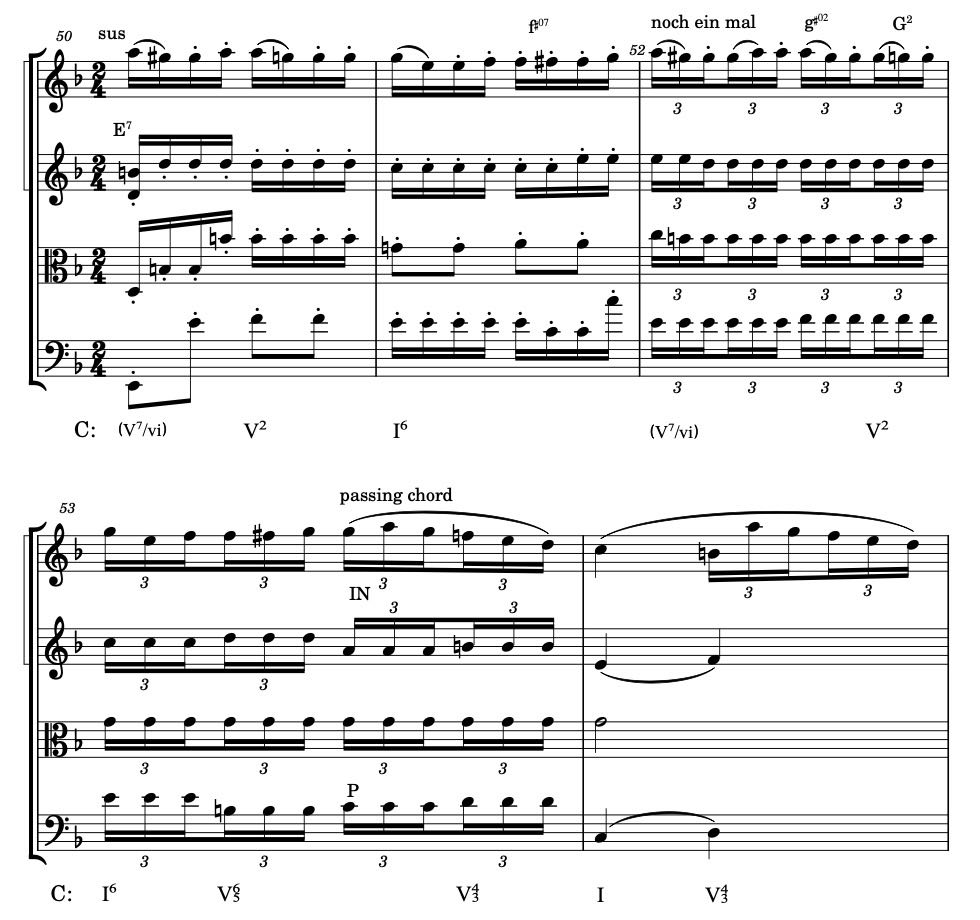
fig.17 Beethoven: string quartet op.135, i, mm.50-54, bass notes notated always in the cello
The dominant substitute V/vi
I think here we enter the world of the V/vi – I progression as a substitute for a V – I progression. This was already encountered in Beethoven’s piano trio in B-flat major, op.11 Gassenhauer. Hepokoski and Darcy discuss this progression as a second level default for ending a development section (instead of the first level defaul: an active dominant of the tonic).[12]Hepokoski & Darcy Elements of Sonata Theory, 198-201.
In this context, however, there is no question of ending a development section because we are in the middle of the secondary theme. Nevertheless the harmonic progression is the same. Hepokoski and Darcy speak of a mediated or an unmediated progression V/vi – I. Unmediated means that the V/vi is immediately followed by the tonic like at the end of the development in the first movement of Beethoven’s violin sonata in F major, op.24, Frühling. Mediated means that there is a chordal fill between the V/vi and tonic I, “that usually touches fleetingly upon some version of the ‘correct dominant’”.[13]Hepokoski & Darcy Elements of Sonata Theory, 199.
In m.50 and m.52 we find the V7/vi on the first beat and the chordal fill on the second beat and here it is a V2 version of the correct dominant. The V2 – I6 progression is of course very common, supported by the descending bass from the fourth to the third scale degree.
Measure 53, after the arrival on the I6 on the first beat progresses to the tonic I in m.54 by way of inverted dominant seventh chords.
On m.54 we do experience an arrival but it cannot be called a cadence: starting in m.53 (on the I6) there is no predominant and the dominant chords are all inverted. Furthermore the music continuous immediately and repeats the motive of the second half of m.53.
Looking ahead as shown in fig.18, there is a harmonic progression (mm.55-56) which contains more characteristics of a true cadential progression.
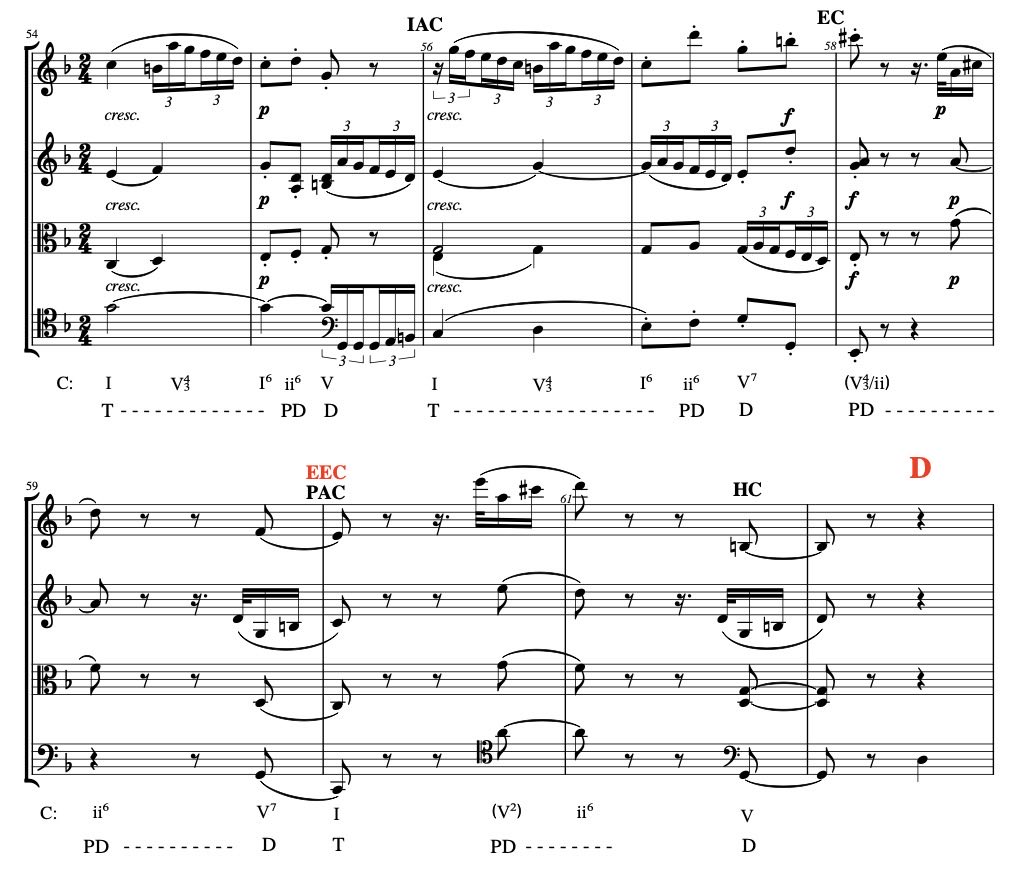
fig.18 Beethoven: string quartet op.135, i, mm.54-62
There is a predominant and a somewhat masked progression from the fifth to the first scale degree in the bass, at best an imperfect authentic cadence (IAC) and not a perfect authentic cadence (PAC). Is this then the end of the secondary theme and therefore the Essential Expositional Closure (EEC)?
I don’t think so because in mm.56-57 there is another cadential progression, which, although it leads to an evaded cadence (EC) on the first beat of m.58, contains the same motivic material as in mm.53-55. So the story still continues and all this belongs to the secondary theme.
The final wink
The evaded cadence (EC) in m.58 on the A dominant seventh chord in second inversion played forte is of course a big surprise. What will happen next? The listener gets almost a quarter note rest to formulate her expectations. Then the surprise resolves to the ii6 of C major on the first beat of m.59, a predominant.
There are two things that stand out; first of all the dynamics: here it is suddenly (subito) piano and secondly the motivic material comes from the primary theme (P) (motive c1, fig.2). It leads to a dominant – tonic progression and finally we find an authentic cadence (IAC, mm.59-60). One could argue that this is a perfect authentic cadence (PAC) because the main voice here is the second violin and that ends on a C natural. So here is finally the end of the secondary theme (S) and the cadence in mm.59-60 is at the same time the EEC.
Beethoven takes the listener with S motivic material to the surprise in m.58 and then ends the second theme (S) with a wink, a wink that refers to the first theme.
This two bar gesture is repeated, now ending on the dominant (mm.61-62) and this is the bridge (to avoid the term Closing Section) to the Development.
Recapitulation of the secondary theme (S)
Now that we have examined the entire secondary theme in detail, I would like to try to provide an overview of its structure. Table 3 summarises this structure.
mm.
38-46
46-48
49
50-52
52-54
54-56
56-58
58-60
description
2+2+4 sentence
tonic prolongation
predominant run-up
cadential progression
cadential progression
cadential progression
cadential progression
cadential progression
ending on
evaded cadence (EC)
tonic
dominant substitute (V7/vi)
dominant substitute (V7/vi)
tonic
IAC
evaded cadence (EC)
PAC/EEC
Table 3: structure of the secondary theme
The secondary theme starts with a sentence of the default 8 measure length, which ends on an evaded cadence and then Beethoven keeps us in suspense for another 14 bars.
First there is the complicated tonic prolongation in mm.46-48 followed by the predominant run-up. One expects a dominant but instead the dominant substitute (V7/vi) turns up (m.50), leading to a I6. This is repeated in mm.52-54, but this time leading to a tonic chord on the first beat of m.54.
Then he leads us through a cadential progression to an imperfect authentic cadence (IAC) in m.56 and one wonders whether this is the end of the secondary theme. But no, the motivic material continues and again after a cadential progression the explosion on the next evaded cadence occurs (m.58).
Then calm eventually returns, and with a nod to the first theme, the secondary theme is finally brought to a close.
Notes
| ↩1 | ivMD is the minor mode version of the triad on the fourth scale degree (of F major). It is a form of modal mixture. Look here for some explanation. |
|---|---|
| ↩2 | Joseph Kerman mentions this characterization in his book on the Beethoven strings quartets: Joseph Kerman, The Beethoven Quartets (New York [ect.]: Oxford University Press, 1967), 355. |
| ↩3 | Hepokoski, James A, and Warren Darcy, Elements of Sonata Theory: Norms, Types, and Deformations in the Late-Eighteenth-Century Sonata (New York [etc.]: Oxford University Press, 2006), 71. |
| ↩4 | Leonard B. Meyer, Explaining Music: Essays and Explorations (Berkeley [etc.]: University of California Press, 1973), 145. |
| ↩5 | Grosvenor W. Cooper and Leonard B. Meyer, The Rhythmic Structure of Music (University of Chicago Press, 1963), 6. |
| ↩6, ↩7 | Cooper and Meyer, The Rhythmic Structure of Music, 13. |
| ↩8 | See for instance: Kerman, The Beethoven Quartets, 354. |
| ↩9 | Hepokoski & Darcy mention these cadences as the first and second level default for ending a transition: Hepokoski & Darcy Elements of Sonata Theory, 25-26. |
| ↩10 | In case of a medial caesura declined the presumed MC does not lead to a secondary theme. Hepokoski & Darcy Elements of Sonata Theory, 45-47. |
| ↩11 | Hepokoski & Darcy Elements of Sonata Theory, 47. |
| ↩12 | Hepokoski & Darcy Elements of Sonata Theory, 198-201. |
| ↩13 | Hepokoski & Darcy Elements of Sonata Theory, 199. |
Recent Comments